
The Gunsmith ZA’s Guide to Common Firearm Problems and How to Fix Them (Part 1)
Estimated reading time: 9 minutes
Summary
In this blog post, you will learn about some of the common firearm problems and how to fix them, from the perspective of a gunsmith. You will discover the causes, symptoms, solutions, and prevention tips for these problems, and how to troubleshoot and maintain your firearms properly and safely.
What you’ll learn
By reading this blog post, you will learn:
- How to fix jamming, which occurs when a firearm fails to feed, fire, extract, or eject a cartridge properly.
- How to fix misfiring, which occurs when a firearm fails to fire a cartridge when the trigger is pulled.
- How to fix accuracy issues, which occur when a firearm fails to hit the target or the point of aim consistently and precisely.
Firearms are complex and sophisticated machines that require proper care and maintenance to function well and safely. However, even with the best care and maintenance, firearms can sometimes encounter problems that affect their performance and reliability. These problems can be frustrating and dangerous, and can ruin your shooting experience.
As a gunsmith, I have dealt with many firearm problems over the years, and I have learned how to troubleshoot and fix them. In this blog post, I will share with you some of the common firearm problems and how to fix them, based on my experience and expertise. I will also explain the causes and symptoms of these problems, and how to prevent and avoid them.
However, before I begin, I want to make it clear that this blog post is not intended to replace the professional service and advice of a licensed gunsmith. Some firearm problems are beyond the scope and ability of the average firearm owner, and should only be approached by a qualified and experienced gunsmith. If you encounter any problem that you are not sure how to handle, or that requires special tools or skills, please do not hesitate to contact me at [https://www.thegunsmith.co.za/#contact](https://www.thegunsmith.co.za – Contact). I will be happy to help you with your firearm needs.
Now, let’s get started with the first part of the common firearm problems and how to fix them.
Jamming
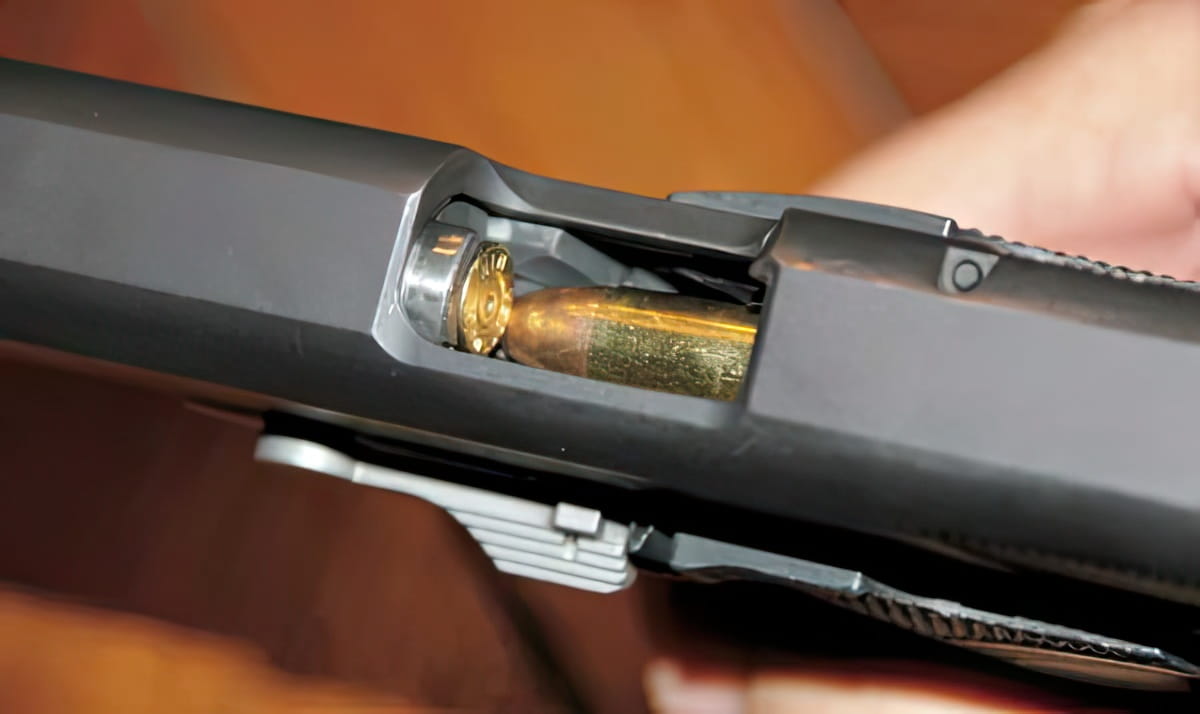
Jamming is one of the most common firearm problems, and it occurs when a firearm fails to feed, fire, extract, or eject a cartridge properly. Jamming can cause a firearm to malfunction or stop working altogether, and can pose a serious safety risk.
There are many possible causes of jamming, such as:
- Dirty or damaged firearm parts, such as the barrel, chamber, breech, bolt, extractor, ejector, magazine, or feed ramp.
- Defective or incompatible ammunition, such as the wrong caliber, size, shape, or quality.
- Improper or insufficient lubrication, which can cause friction and wear on the firearm parts.
- Incorrect or faulty assembly, which can cause misalignment or interference of the firearm parts.
- User error, such as limp-wristing, riding the slide, or improper loading or handling.
The symptoms of jamming can vary depending on the type and severity of the problem, but some of the common signs are:
- Failure to feed, which occurs when a cartridge fails to enter the chamber from the magazine.
- Failure to fire, which occurs when a cartridge fails to ignite when the trigger is pulled.
- Failure to extract, which occurs when a spent cartridge fails to be pulled out of the chamber by the extractor.
- Failure to eject, which occurs when a spent cartridge fails to be thrown out of the firearm by the ejector.
- Stovepipe, which occurs when a spent cartridge gets stuck in the ejection port, forming a shape that resembles a stovepipe.
- Double feed, which occurs when two cartridges try to enter the chamber at the same time, causing a jam.
The solutions to jamming can vary depending on the cause and type of the problem, but some of the general steps are:
- Clear the jam, which involves removing the source of the obstruction and ensuring that the firearm is unloaded and safe. This can be done by following the tap, rack, bang method, which consists of tapping the bottom of the magazine, racking the slide, and pulling the trigger. If this does not work, you may need to manually remove the cartridge or the magazine, or use a cleaning rod or a tool to dislodge the jam.
- Clean the firearm, which involves removing the dirt, debris, carbon, and fouling that can accumulate on the firearm parts and cause jamming. This can be done by using a cleaning kit, which consists of a solvent, a brush, a patch, and a lubricant. You should follow the manufacturer’s instructions and the proper safety procedures when cleaning your firearm.
- Inspect the firearm, which involves checking the condition and function of the firearm parts and the ammunition, and identifying any signs of damage, wear, or defect. You should look for any cracks, dents, scratches, burrs, rust, corrosion, or deformation on the firearm parts and the ammunition, and test the fit, alignment, and movement of the firearm parts. You should also check the caliber, size, shape, and quality of the ammunition, and make sure that it matches the specifications of your firearm.
- Repair or replace the firearm parts or the ammunition, which involves fixing or changing any parts or ammunition that are damaged, worn, or defective, and that can cause jamming. You should use the original or compatible parts and ammunition for your firearm, and follow the manufacturer’s instructions and the proper safety procedures when repairing or replacing them. You should also consult a licensed gunsmith if you are not sure how to repair or replace the firearm parts or the ammunition, or if the problem is beyond your ability or scope.
To prevent and avoid jamming, you should:
- Clean and lubricate your firearm regularly and properly, especially after each use or exposure to harsh conditions.
- Use quality and compatible ammunition for your firearm, and store it in a cool, dry, and clean place.
- Assemble and disassemble your firearm correctly and carefully, and make sure that all the parts are in place and working properly.
- Handle and operate your firearm safely and properly, and follow the basic rules of firearm safety.
Misfiring
Misfiring is another common firearm problem, and it occurs when a firearm fails to fire a cartridge when the trigger is pulled. Misfiring can cause a firearm to malfunction or stop working altogether, and can pose a serious safety risk.
There are many possible causes of misfiring, such as:
- Defective or faulty ammunition, such as the wrong caliber, size, shape, or quality, or the old, damaged, or contaminated primer, powder, or case.
- Dirty or damaged firearm parts, such as the firing pin, the hammer, the striker, the spring, the trigger, or the sear.
- Improper or insufficient lubrication, which can cause friction and wear on the firearm parts.
- Incorrect or faulty assembly, which can cause misalignment or interference of the firearm parts.
- User error, such as limp-wristing, riding the slide, or improper loading or handling.
The symptoms of misfiring are:
- Failure to fire, which occurs when a cartridge fails to ignite when the trigger is pulled.
- Click, which occurs when the trigger is pulled, but the only sound that is heard is a click from the hammer or the striker hitting the firing pin.
- Hang fire, which occurs when there is a noticeable delay between the trigger pull and the cartridge ignition, causing a delayed or slow fire.
- Squib load, which occurs when a cartridge has a low or insufficient charge of powder, causing a weak or incomplete fire, and leaving the bullet stuck in the barrel.
The solutions to misfiring are:
- Clear the misfire, which involves removing the source of the problem and ensuring that the firearm is unloaded and safe. This can be done by following the tap, rack, bang method, which consists of tapping the bottom of the magazine, racking the slide, and pulling the trigger. If this does not work, you may need to manually remove the cartridge or the magazine, or use a cleaning rod or a tool to dislodge the misfire.
- Clean the firearm, which involves removing the dirt, debris, carbon, and fouling that can accumulate on the firearm parts and cause misfiring. This can be done by using a cleaning kit, which consists of a solvent, a brush, a patch, and a lubricant. You should follow the manufacturer’s instructions and the proper safety procedures when cleaning your firearm.
- Inspect the firearm and the ammunition, which involves checking the condition and function of the firearm parts and the ammunition, and identifying any signs of damage, wear, or defect. You should look for any cracks, dents, scratches, burrs, rust, corrosion, or deformation on the firearm parts and the ammunition, and test the fit, alignment, and movement of the firearm parts. You should also check the caliber, size, shape, and quality of the ammunition, and make sure that it matches the specifications of your firearm.
- Repair or replace the firearm parts or the ammunition, which involves fixing or changing any parts or ammunition that are damaged, worn, or defective, and that can cause misfiring. You should use the original or compatible parts and ammunition for your firearm, and follow the manufacturer’s instructions and the proper safety procedures when repairing or replacing them. You should also consult a licensed gunsmith if you are not sure how to repair or replace the firearm parts or the ammunition, or if the problem is beyond your ability or scope.
To prevent and avoid misfiring, you should:
- Clean and lubricate your firearm regularly and properly, especially after each use or exposure to harsh conditions.
- Use quality and compatible ammunition for your firearm, and store it in a cool, dry, and clean place.
- Assemble and disassemble your firearm correctly and carefully, and make sure that all the parts are in place and working properly.
- Handle and operate your firearm safely and properly, and follow the basic rules of firearm safety.
Conclusion
This is the end of the first part of the blog post on the common firearm problems and how to fix them. In the next part, I will cover the other common firearm problems, such as accuracy issues and wear and tear, and how to fix them. I will also provide some general advice on how to prevent and avoid the common firearm problems, and how to maintain your firearms properly.
I hope that this blog post has been informative and interesting for you, and that you have learned something new and valuable from it. If you want to learn more about gunsmithing and my services, you can check out my website at [The Gunsmith](https://www.thegunsmith.co.za/, or you can contact me directly. I would love to hear from you and to help you with your gunsmithing needs. Thank you for reading, and stay tuned for the next part of the blog post, where I will cover the other common firearm problems and how to fix them. 😊
Check back next week for part 2